Fourth Sunday in Advent & the Great “O” Antiphons

The final week of Advent approaches and with it the opportunity to write about another great tradition in the Western Church: the Great “O” Antiphons. These daily prayers and songs date to about the 12th C. and are traditionally credited to Christian followers of St. Francis of Assisi. During the same time period, we offer a special program for Christmas Eve and another for the period from Christmas Day through Epiphany Eve. More, including links to these unique programs, after some comments about Fourth Sunday in Advent. I invite you to share these links with friends and family. Because of the calendar overlap of Advent and Christmas seasons, all the presented in this post for the final Sunday in Advent. Related material for Christmas Day will be posting

My Podcast Homily for Fourth Sunday in Advent on the theme of “The First Gift of Christmas,” was posted on 12/20/24. In Episode Two of the AIC Seasonal Video series, Advent: a Season of Penitence & Preparation, I discuss Archbishop Cranmer’s 1549 Collect, its origin in the Sarum version of the Gelasian Sacramentary, and the additional wording concerning running the race (itself inspired by Hebrew 12:1b) which was added for the 1662 Book of Common Prayer. I also discussed the Epistle reading, Philippians 4:4-7 (“the Lord is at hand”) and the Gospel lesson, John 1:19-28, concerning inquires and questions posed to John the Baptist.

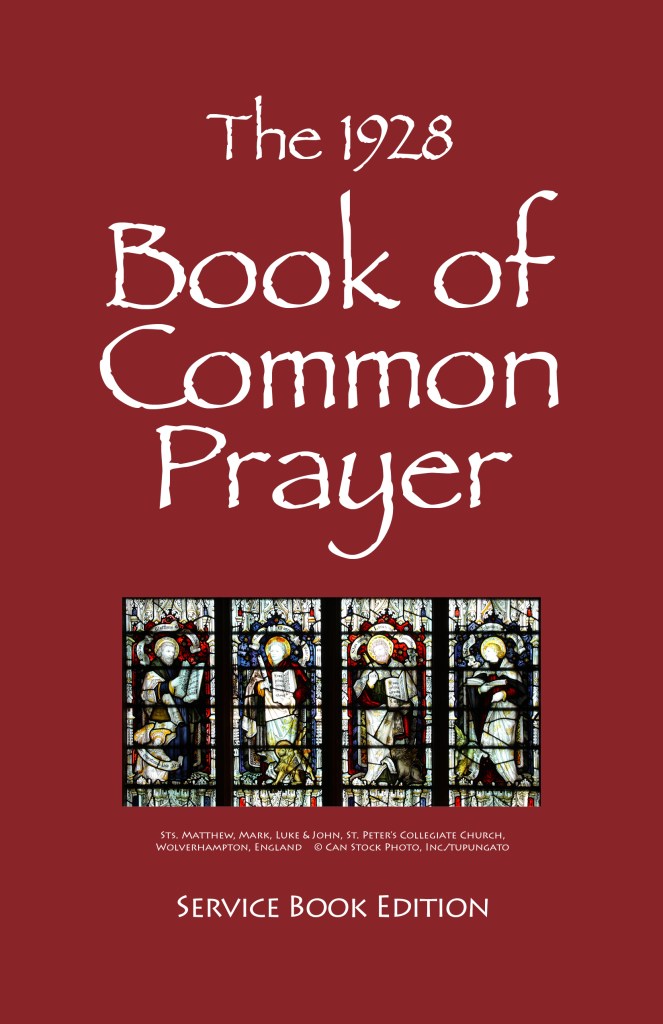
The post included an image from the AIC Bookstore Publication, The Gospel of John Annotated & Illustrated, of John the Baptist baptizing a man in wooden tub (Ms. Additional 42497, British Library). The volume, with 95 illustrations from the 6th through the 19th C, is available only through my Amazon Author Central page. Additional information is available on the AIC Bookstore page. Royalties from all the AIC Bookstore Publications are contributed to the AIC. A related Podcast Homily for Fourth Sunday in Advent, based on the assigned Morning Prayer readings for that day in the 1928 Book of Common Prayer, is also available for those who prefer listening to hearing this kind of material.

O-Antiphons-Title1-small.jpg

This series includes music, historic Christian art and Scripture readings based on a 12th C. service in northern Italy in celebration of the seven days before Christmas. Each day is focused on a theme word in Latin. The daily titles, in date order, are titles/descriptors of our Saviour Jesus Christ: Wisdom, Lord, Root of Jesse, Key of David, Dayspring, King of Nations, God with us. They have been incorporated into Christian worship for Advent in many denominations. This video series, which celebrated the start of the AIC’s second decade on the web, seeks to make them more broadly available and accessible on demand, 24/7, virtually anywhere in the world. The audio-only versions, in portable MP3 format, are available through the episode links on the Podcast Archive page.

December 18th – O Sapientia
December 19th – O Adonai
December 20th – O Radix Jesse
December 21st – O Clavis David
December 22nd – O Oriens
December 23rd – O Rex Gentium
December 24th – O Emmanuel

Another AIC seasonal resource is our feature video for Christmas Eve, based upon the traditional English model. It was created as a resource for those unable to access coverage of live events, most typically at King’s College, Cambridge, England, on Christmas Eve. While it is labelled “December 24th, it can be accessed at any time, year round.

lessonscarols-title-clear

December 24th

There will be another Blog post on December 23rd which will contain information and links to videos and podcasts for Christmas Day and for each of the Twelve Days of Christmas, which begin on December 25th and end on Epiphany Eve, January 5th.

As always, thank you for your continued interest in and support for the Anglican Internet Church’s online ministry and digital resources. Glory be to God for all things! Amen!

Third Sunday in Advent Season and AIC Bookstore Preview – Part 9

My Podcast Homily for Third Sunday in Advent was posted on 12/13/24 and is linked from the Archives column at the right side of the page. The comments include observations about the Collect, which was written for the 1662 Book of Common Prayer, replacing Archbishop Cranmer’s original collect; the Epistle (1 Corinthians 4:1-4) with St. Paul’s thoughts on the subjects of stewardship and “mysteries); and the Gospel lesson (Matthew 11:2-10), which is Matthew’s account of John the Baptist’s to inquire of Jesus if he was “the coming one.” The subject is discussed in Chapter 11, The Gospel of Matthew: Annotated & Illustrated, which is available through my Amazon Author Central page. Additional information is found on the AIC Bookstore page. The Homily for Advent 3 is linked from the Podcast Homilies page. Like all my homilies in Advent there is a theme phrase. this time being Rejoice in the Love of God. The Third Sunday in Advent is also discussed and illustrated in the AIC Video series, Advent: the Season of Penitence & Preparation in Episode Two of the series.

I have been busy this month updating my inventory (in Excel format) of all of the images which have been used in Blog entries. These go back to the first entry, for August 31, 2014, when I moved the AIC web site to WordPress. I have found and corrected many spelling and other errors in the image credits. Readers of the Blog should be aware that all the older videos (hosted on You Tube) were moved to our new Vimeo site later in 2014. Should an older video link fail, please go to entry of the same title in the Digital Library or Podcast Archive entries, links to which are found at the top and bottom of all pages. These include the Digital Library (of videos) — with their MP3 soundtracks located on the Podcast Archive page. MP3/Audio Podcasts for Holy Communion services are linked from the Podcast Homilies page. The MP3/Audio soundtracks for the Morning Prayer series created in 2022 and 2023 are linked from the Podcast Homilies-Morning Prayer page. Links to these pages are located at the top and bottom of each page. All books in the AIC Bookstore (and listed on that page) are print-on-demand and sold through my Amazon Author Central page, with all royalties contributed to the AIC. Everything else on this site is free. All pages are consistent with the WATCH-LISTEN-READ initiative created about five years ago, based upon people’s different learning preferences.

The Beliefs of the Anglican Church was created for use in the Christian education of those who desire to become Anglicans, whether youths or adults. The text provides answers to questions raised in traditional Anglican catechisms. The volume also includes two catechisms, one intended for young people with family connections to Anglican worship and the second for adults who come from non-Anglican backgrounds, especially those with no prior doctrinal education.

The book is printed in 144 pages (eight in the Preface and 136 in the body text. The text is divided into Creeds (Nicene & Apostles), Scripture (Old Testament/ Old Testament Apocrypha used in the Prayer Book lectionary); The Commandments & the Summary of the Law; The Lord’s Prayer; the Seven Sacraments; Doctrine (with sections on Church/Grace/Faith/Sanctification/Mercy/Fear of the Lord/Sin/Prayer; plus the Anglican Church Calendar and a primer on the Church Building and on Church Etiquette. The volume is printed with a color cover and text in black and white on 144 pages (eight in the Preface & 136 the balance of the text). There is a summary and black and white image for each of the other 21 volumes available in the AIC Bookstore.

Again, thank you for your interest and support. Glory be to God for all things! Amen!

Second Sunday in Advent & AIC Bookstore Preview, Part 8

Advent, the season of both penitence and preparation, continues on Sunday, Dec. 7. As with other Sundays in Advent, I continue with a theme word or phrase. For Second Sunday in Advent my Podcast Homily is focused on the “Fire of Judgment.” For those who prefer visual imagery, the commentary for Second Sunday in Advent is available (paired with First Sunday in Advent) on the Digital Library page. The commentary comes from our Seasonal Video series: Advent: the Season of Penitence & Preparation. The Digital Library pages offers access to the Seasonal Video series not only for Advent but also Christmas, Twelve Days of Christmas, Epiphany, “Gesima,” Lent, Easter, Good Friday, and Trinitytide (including Trinity Sunday).

For Second Sunday in the newly-created season of Advent, Archbishop Cranmer wrote an original Collect, first published with the 1549 Book of Common Prayer. The Collect includes the only reference to God in the Book of Common Prayer collects as “Blessed Lord.” As in previous years, I offered an image of Christ-in-Majesty which was produced circa 700 A.D. at a Benedictine monastery in Wearmouth-Barrow, Northumbria, England. The volume containing the image has been at the Laurentian Library, Florence, Italy, since 1786 A.D. For this post, the size is small because I have not found a higher resolution version that would not “pixilate” when enlarged.. The term “Christ-in-Majesty” is a Western Church name that is comparable to the Eastern Church’s use of Christ Pantokrator, which is roughly translated as Ruler of the Universe, but can also be interpreted as “He who does whatever He wishes.”

Christ-in-Majesty with angels and evangelists, frontispiece, Codex Amiatinus, folio 796v, early 8th C.. Laurentian Library, Florence, Italy. Public Domain.

Continuing the preview of important volumes among the AIC Bookstore Publications, the focus for Second Sunday in Advent A.D. 2025 is Christian Spirituality: An Anglican Perspective. This volume is the first in this series of previews which is printed in black & white only in the traditional 5.5″ x 8.5″ format. All the earlier books are full color printed in the 8.5″ x 8.5″ format, which enhances the color illustrations, allowing for larger, full page images.

I wrote this volume during my service at St. John Chrysostom Anglican (now closed) to answer commonly-asked questions from both parishioners and those inquiring about membership. List the parts here. 144 pages with 18 illustrations (including the cover image of Christ as the Lamb of God, St. Paul’s Church, Halifax, Nova Scotia (copyright Can Stock Photo, Inc./onepony).

The subject of “spirituality” can be confusing. In this book I explain it in the context of Anglican worship using the 1928 Book of Common Prayer, which descends from the first prayer book in English published in 1549 in time for Trinity Sunday. The volume is divided into five parts. In Part One, I explain the “first premise” of Christian Spirituality: which is the reality of evil in the world, and, second, its corollary: God’s eternal truth as the only antidote and place it in the context of the writings of two Anglican clergymen: Archbishop Thomas Cranmer and the Blessed Lancelot Andrewes, Chaplain to Elizabeth I and James I and a member of the supervisory team which prepared the King James Bible.

In Part Two, the explore the many ways which mankind can “see” the face of the Almighty God. In Part Three, I explore the true meaning of the phrase: “Blessed is the man…Blessed are….” and their many variations in the Book of Psalms. In Part Four, I explore another phrase, also based on the Psalter: “Put not your trust in princes….” through study of three stages of prayer: of words; of the mind; and of the heart; and offer ideas on developing one’s own catanae, or prayers based on Scripture; offering apostolic wisdom based on the words of two pair of saints: Peter and Paul; James and John. In Part Five, “A Primer on Using our Resources,” I explain how to use the resources available through links on the AIC web site including media based on the written word, the spoken word or, in a combination of the two, in visual media. All book royalties are contributed to the AIC. Learn more about Christian Spirituality: an Anglican Perspective, available through my Amazon Author Central page, and about all our publications on the AIC Bookstore page.

Next time, I will explore both Third Sunday in Advent and another 5.5″ x 8:5″ volume. As always, thank you for your interest and support. Glory be to God for all things! Amen!

First Sunday in Advent & AIC Bookstore Preview – Part 7

Sunday, Nov. 30th, A.D. 2025, marks the start of the penitential season of Advent. My Podcast Homily for First Sunday in Advent is linked from the Digital Library page. The theme is “The Coming of the Light” and in it I discuss Archbishop Cranmer’s new Collect for the occasion, the Epistle reading (Romans 13:8-14) and the Gospel lesson (Matthew 21:10-13). Another Podcast Homily for First Sunday in Advent, this time based on the Morning Prayer readings for the same occasion, is also available. Should you be visual-minded you can watch Episode One (focused on First and Second Sunday in Advent) in our Seasonal Video series, Advent: a Season of Penitence & Preparation. In this video series I also explain other traditions associated with Advent, including the “Greening of the Altar,” the use of Chrismons rather than Christmas ornaments, and the practice of avoiding Christmas carols until Christmas Eve.

For this post for First Sunday in Advent, the highlighted AIC Bookstore Publication is a very special book, Angels: In Scripture, Art & Christian Tradition, which was published in A.D. 2023.

The cover art is an 11th C. Byzantine-influenced mosaic in the upper registry, Baptistery of Saint John, located opposite the Basilica of Santa Maria dei Fiori, Florence, Italy. A full view of the mosaic is printed on page 4.

In the Preface to Angels: In Scripture, Art & Christian Tradition I offered this: “The purpose of this book is to educate Christians in the rich literary, artistic and liturgical traditions concerning angels in both the Western and Eastern Church understanding.” In the book I explore every mention of angels in the Old and New Testament, plus the second canon Old Testament and a non-canonical Old Testament book in the Eastern Church tradition. There are 153 illustrations including frescoes, icons, mosaics, stained glass windows, watercolors, paintings and engravings. I pay special tribute to the Holy Roman Emperor Charlemagne and his spiritual advisor, the Blessed Alcuin of York; and to the Ottonian and other successors to the title Holy Roman Emperor in the Western Church; to St. John of Damascus, author of the Exact Exposition on the Orthodox Faith, the earliest known explanation of the origin, nature and purpose of angels; and, finally, to St. Clement of Alexandria and St. Thomas Aquinas, the former from the Eastern Church tradition and the latter from the Western Church tradition.

The book is divided into five parts: Part One is a primer on angels); Part Two is focused on every reference to angels in the Old Testament; Part Three includes discussion of each mention of angels in the New Testament; Part Four is focused on references to angels in Christian worship; and Part Five includes discussion and illustrations of angels traditions around the world, including foods and festivities.

The publication of Angels: In Scripture, Art & Christian Tradition completes the planned catalogue of AIC Bookstore Publications. Corkie Shibley suggested the concept of a book on angels. As a special bonus for readers, I have included her recipe for the remarkably light biscuits, which she calls “Angel Biscuits.” The recipe is placed at the end of Part Five.

Royalties on this and the other AIC Bookstore Publications are donated to the AIC. The book is available online through my Amazon Author Central page. Additional information about the catalogue is available on the AIC Bookstore page.

I offer a special thanks to our contributors — and also those who assisted in the production of the book, each of whom is named in the Preface. Contributions and book royalties provide the funds necessary to obtain the high-resolution images and licenses for the use of the same. Through reader support, we have been able to collect and catalogue over 3,000 such images, most of them rarely seen by the general public.

As always, I thank you for your interest and support. Glory be to God for all things! Amen!

Trinity 23 and AIC Bookstore – Part Six

Ooophs. In A.D. 2025, there is no Trinity 23. On the traditional calendar it is preempted by Sunday Next Before Advent. In 2024 A.D. for reasons I do not remember, I did not provide a Blog post for Trinity 23. In 2025 A.D. it is the final Sunday after Trinity, since Advent begins on Sunday, November 30th. However, you can listen to my Podcast Homily for Trinity 23 or, for a visual version, watch Episode Eight in Trinitytide: the Teaching Season. The Gospel reading for Trinity 23 includes Jesus’ use of the phrase, “Render unto Caesar…” (Matthew 22:15-22). In the video series, the discussion includes another of James Tissot’s remarkable watercolor interpretations of the words of Christ. The Gospel reading for Trinity 23 is the ninth quotation from the Gospel of Matthew in Trinitytide.

For this week’s Blog posting, the focus is on the second of two AIC Bookstore Publications focused on the primary seasons on the Anglican Church Calendar: Easter and Christmas.

The cover image is an 11th C. mosaic, Christ Resurrected (known as the Anastasis in Greek), east wall, Narthex, Hosios Loukas Monastery, Distoma, Greece. Source: Wikipedia Commons. The theological symbolism of the image is discussed in Chapters 2 and 3.

Easter: The Resurrection of Our Lord in Scripture, Art & Christian Tradition is presented in 156 pages. There are 132 illustrations from the 6th C., 9th through 17th C. and 19th through 21st C. The book is divided into six parts, plus a Preface, List of Illustrations and a brief guide to the art of illumination of Scripture. Part One includes discussion and art related to events and prophecies during the three days between Good Friday and Easter Sunday (called the Triduum in Latin), including the “Harrowing of Hades.” This is the period of Jesus’ visit in Hades/Hell that is mentioned in the Apostles’ Creed. A special text box includes the Easter/Paschal sermon of St. John Chrysostom, which is still delivered annually on Holy Saturday in many Eastern Orthodox Churches. Chapter Four in this section is focused on Jesus’ prophetic references to Resurrection in three days.

Part Two is focused on events of the Resurrection recorded for early on Easter Day, according to the accounts in the Gospels of Matthew, Mark, Luke and John. A special text box explains the “Three Marys” tradition regarding the three women at the empty tomb in these Gospel accounts.

Part Three is focused on Post-Resurrection appearances of Jesus Christ, as recorded in the Gospels of Luke and John, including those occurring on Easter evening and the eight days afterward, including accounts of the “doubts” of St. Thomas and his confession; on meeting Apostles on the road to Emmaus and the subsequentmeal at Emmaus; and Jesus with the Apostles at the Sea of Tiberius, uniquely recorded in the Gospel of John.

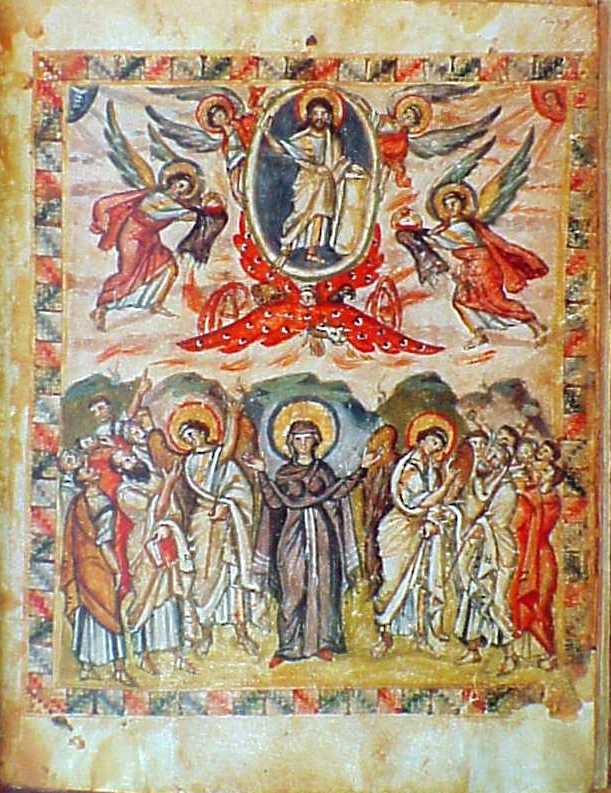
Part Four is focused on Jesus’ final post-Resurrection appearances, the Great Commission and the Ascension. The text is based on the accounts in the Gospels of Matthew, Mark and Luke, plus The Acts of the Apostles. There are fourteen illustrations of the Ascension depicting the event from both the Western and Eastern Church traditions.

Part Five is focused on music for Easter in both the Western and Eastern Church traditions, including the text of Easter hymns and Psalms; a special text box listing all the seasonal music printed in another AIC Bookstore Publication, The St. Chrysostom Hymnal, which was used at my former parish and which is now available in paperback.

Part Six is focused on Easter traditions both in liturgy and foods and includes images of Easter worship in Kent, Lancashire, St. Agnes Island, and London, England; and in Bucharest, Romania; Kiev, Ukraine; Emmaus-Nicopolis, Israel; and Gomel City, Belarus. For this volume, Corkie Shibley created a recipe for “Empty Tomb Hot Cross Buns.”

Sources for this collection of Christian art include icons, mosaics, frescoes, altarpieces, bas reliefs, tapestries, oil paintings and watercolors; stained glass windows; illustrated Psalters, Pericope Books, Sacramentaries, as well as illustrated Bibles and Gospels produced for the use of both clergy and royalty. The format used in Easter: The Resurrection of Our Lord in Scripture, Art & Christian Tradition is slightly different than in the Christmas volume. For this blog post, there is no image of an inside page, because nearly all the illustrations, for best effect, are printed on full pages placed opposite the actual Scripture text.

This volume, first published in A.D. 2023 and updated at Epiphany A.D. 2024, was written and edited primarily for the education of the laity of the Church; however, clergy from both the Western and Eastern Church traditions may find the Bibliography and the Sources of Illustrations pages useful for further learning and research. I am grateful to the staff at libraries and other archives in England, Europe and the United States and to our donors, who make possible the acquisition of the high-resolution images used in this book. Several individuals who provided exceptional assistance in resolving the many technical issues (resolution, clarity, etc.) are named in the Preface.

Like all the AIC Bookstore Publications, Easter: The Resurrection of Our Lord in Scripture, Art & Christian Tradition is available only through my Amazon Author Central page. Royalties for all the AIC Bookstore Publications are contributed to the AIC. Additional information about pricing and pagination of this and the other AIC Bookstore Publications is found on the AIC Bookstore page.

As always, thank you for your interest and support. Glory be to God for all things! Amen!

Trinity 22 & AIC Bookstore – Pt. 5

My Fr. Ron’s Blog post for Trinity 22 was posted on October 25th, A.D. 2024. The episode is linked from the Archives column at the right side of the page. I discussed the Collect, based on the late Gregorian Sacramentary (10th C.), St. Paul’s epistle to the congregation at Phillipi (Philippians 1:3-11) and St. Matthew’s account of Jesus’ lesson on the Unforgiving Servant (Matthew 18:21-35) with first half, 17th C. art work by Claude Vignon. These readings were also discussed in Episode Eight in our Christian Education video series, Trinitytide: the Teaching Season. The podcast version of Episode Eight is linked from the Podcast Archive page. Additionally, the Podcast Homily for Morning Prayer on the Twenty-second Sunday after Trinity is also available.

This week’s post continues my focus on the unique books available in the AIC Bookstore, on this occasion focusing on the first of two books on the Church’s two major seasons, Easter and Christmas. Here, near the start of Advent in A.D. 2025, I present more about Christmas: The Nativity of Our Lord in Scripture, Art & Christian Tradition. This resource would be a great gift to any Christian this year. The volume is available only through my Amazon Author Central page.

Cover image, a stained glass interpretation at an unspecified location, copyright Waamel|Dreamstime.com.

The book was first published at Christmas, A.D. 2023. Art work includes 113 illustrations from the 5th to the early 20th C., including mosaics, icons, frescoes, stained glass, paintings, watercolors and two maps: Palestine in the Time of Christ and an 1835 Plan of Jerusalem. This 173-page high-quality paperback is divided into five parts. Part One includes text and commentary on St. Luke’s unique pre-Nativity account (Luke 1). Part Two continues with text and commentary on St. Luke’s version of the actual Nativity and his transition to post-Nativity events (Luke 2). Part Three includes text and commentary on St. Matthew’s version of the Nativity through the flight to and return from Egypt (Matthew 1 & 2). Part Four is focused on two pre-and post-Nativity traditions with art related to The Great “O” Antiphons (for Dec. 18th to 24th) and The Twelve Days of Christmas (with a theme words or phrases for Dec. 25th to Jan 5th). Part Four includes examples from the AIC’s two video and podcast series of the same name. Part Five, Christmas Traditions from around the World, includes discussion and illustrations of gift-giving, Dickens’ A Christmas Carol, Christmas cards, the Three Kings tradition, Christmas music and foods, including Corkie Shibley’s recipe for my grandmother’s Sugar Cookies.

With its unique format and content, this volume will enhance anyone’s personal library of Christian resources. Next time, my focus will be on Easter: The Resurrection of Our Lord in Scripture, Prayer & Christian Tradition.

As always, thank you for your interest and support. Sales of these volumes help keep the Anglican Internet Church’s unique resources available online, mostly free of charge. All book royalties are donated, as received, to the AIC. Glory be to God for all things! Amen!

Trinity 21 & AIC Bookstore – Pt. 4

My Blog post for Trinity 21 was added on 10/19/2024 and is linked from the Archive column at right. In the post, I discussed the late-period Gregorian Sacrementary as the source for the Collect; St. Paul’s unique advice in Ephesians 6:10-20 to put on “the whole armour of God”; and St. John’s account of the Healing of the Nobleman’s Son with an illustration by Jan Luyken from the enormous and unique volumes known as the Bowyer Bible.

This week the focus continues on books available through the AIC Bookstore, with the second of two studies of the Psalter.

This volume includes rarely-seen images from Psalters produced in the early 9th C. through the late 17th C. The primary source is the Stuttgart Psalter, produced in the Scriptorium, Abbey of Saint-Germain-des-Pres, circa 820 A.D. Saint-Germain-des-Pres is one of the four quarters of Paris, located on the south bank of the Seine and named after a 6th C. mayor of Paris. Although produced after the death of the Blessed Alcuin of York (d. 804 A.D.), the volume reflects the scholarship of Alcuin during his many years as spiritual advisor to the Holy Roman Emperor Charlemagne and as Abbot of St. Martin of Tours, Tours, France. More information about this 442-page volume is available on the AIC Bookstore page and can be ordered online through my Amazon Author Central page.

Psalm 7, illumination from Stuttgart Psalter, interpreting verse 2.

For this volume, Corkie Shibley selected the Apple typeface Luminare and created the unique capital/scroll combination background for the first word in each Psalm. The color of each was chosen to match color profile of the first illustration chosen for each Psalm. The illustration is from page 18, which is placed opposite the opening verses of Psalm 7, dramatically illustrating verse 2: “Lest he devour my soul like a lion.”

The Psalters used in the volume include the Athelstan Psalter (924 A.D.), produced near Liege, France, for Athelstan, King of Wessex, England; Bedford Psalter and Hours (1414-1422 A.D.), produced in either London or Westminster; the Psalter of Maria of Burgundy, produced circa 1470-1479 in Flanders possibly as a wedding present for her marriage to the Hapsburg Emperor Maximilian I; and the Psalter of Henry VIII, produced in southeast England around 1540-1541, including King Henry’s personal notations on many Psalms.

The next post in this series will be focused on the first of two volumes focused on the primary seasons on the Anglican calendar, Christmas: The Nativity of Our Lord in Scripture, Art & Christian Tradition.

As always, thank you for your interest and support.

Trinity 20 & AIC Bookstore – Part 3

My Fr. Ron’s Blog post for Twentieth Sunday after Trinity was posted on 10/11/2024. In the post I discussed the two changes to the original Gelasian Sacramentary version that were made in 1662 & 1789; St. Paul’s emphasis on his understanding of “joy” in the singing “Psalms, hymns and spiritual songs”; and St.. Matthew’s account of the Parable of the Wedding Feast (Matthew 22:1-14). The post is available using the link for October 2024 in the Archives column.

The same set of readings was discussed and illustrated in Episode Eight in our Christian Education video series, Trinitytide: The Teaching Season. All these episodes include illustrations from our archive of over 3,000 examples of Christian art over the centuries. Another illustration of the Parable of the Wedding Feast is featured in Chapter 22 of The Gospel of Matthew: Annotated & Illustrated, available through my Amazon Author Central page.

Cover art: King David on his harp, stained glass window, Collegiate Church of Notre Dame, Dinant, Belgium. Copyright Jorisvo/Dreamstime.com

This week’s example of works in the AIC Bookstore is The Prayer Book Psalter: History, Text & Commentary (370 pages, six illustrations, including two on the front or back cover). The book brings together both Western Church and Eastern Church interpretations and was intended to answer commonly-asked questions about the Psalter. It can be used as a quick-reference for either clergy or laity.

The text of each Psalm, using the 1928 Book of Common Prayer (1943 U.S. Edition), is followed by commentary from a Christological perspective, where possible using quotations from the ancient fathers of Christianity, including saints Athanasius of Alexandria, Augustine of Hippo, Gregory of Nyssa, James, John Cassian, John Chrysostom, Martin Luther, the Apostles Paul and Peter, and Theodoric of Cyprus. For each Psalm there is a listing of where, if applicable, each Psalm has been used in Christian hymns and songs. The music cross-reference is focused on traditional songs and hymns used not only in the Anglican worship tradition, but also the Baptist, Methodist and Presbyterian traditions.

Each Psalm (see the sample page of Psalm 149, one of the shortest Psalms) is categorized by its type, either Penitential, Passion, Cursing, Messianic, Royal, Hallel and Songs of Ascent; by the traditional understanding of its authorship (David, Sons of Korah; Sons of Asaph (Zaccur, Joseph, Nethaniah and Azariah); Solomon; Moses; Ethan the Ezrahite; and Unknown; and by how and where it is used in the 1928 BCP (Morning Prayer, Evening Prayer, Other); and by its classification in one of the traditional five “Books” of the Psalms in the full text section of the BCP. At the back of the book is a Glossary listing every person or place named in the Psalter, with entries cross-referenced to other Psalms, other Scripture and to other books in the AIC Bookstore. The volume is available exclusively through my Amazon Author Central page.

Next week’s topic will be our other book focused on the Psalms, The Prayer Book Psalter: Picture Book Edition, which features illustrations from the historic Stuttgart Psalter (circa 820 A.D. during the reign of Holy Roman Emperor Charlemagne) and 20 other illustrated editions of the Psalter from the 10th to the 17th C., including the Psalter of Henry the Eighth. The page size is 8.5″ x 8.5″ with the Psalm text set in large type in the Apple Luminari typeface, with illuminated capitals created by Corkie Shibley, and with the Psalm’s title in both English and Latin. The book was produced with the assistance of the Wurttembergische Landesbibliothek, Stuttgart, Germany, the holder of the only known copy of the Stuttgart Psalter. The Stuttgart Psalter is associated with the Blessed Alcuin of York, author of the Collect for Purity in the Anglican Holy Communion liturgy and spiritual advisor and teacher to the Emperor Charlemagne, his family and his royal court, and Abbot of the Abbey of St. Martin, Tours, France.

As always, thank you for your interest and support. Glory be to God for all things! Amen!

Trinity 19 & the AIC Bookstore, Part 2

My Father Ron’s Blog posting for Trinity 19 was placed online on 10/4/2024. I commented upon the origin of the Collect (Gelasian w/amendment in the 1662 BCP, St. Paul’s discussion of Christian virtues in the Epistle reading (Ephesians 4:17-32) and the Gospel lesson (Matthew 9:1-8, the fifth of nine readings from St. Matthew in Trinitytide). The post is linked within the right column on the Fr. Ron’s Blog page.

This week’s post is focused on two related volumes from the AIC Bookstore. Both books grew out of my local ministry in Richmond, VA and surrounding area. Since our ministry received no financial support from any Anglican jurisdiction, we needed to find ways of reaching people at the lowest possible cost, with newspaper advertising, of doubtful value in any situation, being out of the question.

The original version of Prayers in the Christian Tradition was printed on my office laser printer on 8.5 x 11 letter paper, with four pages on each side. The paper was folded in half on the short axis, then folded again across the long axis, cut into four pages which were then collated and stapled together, with finished pages The completed book fit comfortable into a shirt or suit coat pocket, so that the prayers could be read anytime, anyplace, including lunch break at work, on a bus or subway, waiting in a doctor’s or lawyer’s waiting room. It sold for a mere $5.00, but was most often given to expressing an interest in Anglican worship. The version now available was reformatted into a size compatible with KDP Publishing’s standard book sizes. A new color cover was designed by Corkie Shibley. The volume includes prayers from the 1st to the 20th C. The index of sources include Saints & Blesseds, Bishops & Archbishops; Prayers and Offices (by Name and by Origin); Other People and Places; plus a complete Scripture index divided into Old Testament and New Testament sources.


The second book, Hear Us, O Lord: Daily Prayers for the Laity is divided into three sections: Awesome Prayers to Our Awesome God (which also traces to my earliest ministry in Richmond) which are offered in six sections, based on topic or focus: Praise & Thanksgiving; Protection & Deliverance; Penitence; Righteousness; Songs of Praise; and Other Prayers. Part Two, Little Prayers: Catenae on the Psalms, offers short prayers based on just one Psalm; catanae (meaning short prayers based on Scripture) on single Psalm, and Catanae based on multiple Psalms. Part Three, Daily Prayers for the Laity, was developed based on the traditional Church practice of prayers spoken at fixed times of the day, or the Hours: First Hour (sunrise or 6 AM); Third Hour (9 AM); Sixth Hour (Noon); Ninth Hour (3 PM); Vespers (traditionally 5 PM or local sunset); and Compline. Hours offices have a defined pattern: Invocation; First Prayer (from Scripture); the General Confession; the Lord’s Prayer; followed by a sequence of “Chapters” (two through six) based on a New Testament verse); Antiphons (or verse and response readings; a Psalm reading; and two closing verses and responses. Since no blessings is conferred, these can be said by anyone, layperson or clergy. In my household these said on Sundays when we do not attend for parish worship. This compilation includes a short explanation of the origin of “offices” and are based upon prayers from many Western and Eastern Church traditions including Anglican, Roman Catholic, Syrian Antiochian, and several Eastern European Orthodox traditions, including Russian. Should an ordained person be present, a text for an Absolution and Benediction are included.

Like all the AIC Bookstore Publications, these volumes are printed on demand and sold through my Amazon Author Central page, with all book royalties contributed to the AIC.

As always, thank you for your interest and support. Glory be to God for all things! Amen!

Trinity 17 & the AIC Bookstore, Part 1

This week I have been reviewing files and updating some content. In doing so I noticed a few oversights, including the absence of a post for Trinity 23, which will not appear not the calendar in A.D. 2025. I will try to remedy the absence with a new post later in the year. For this week, I refer readers/viewers to the Fr. Ron’s Blog post for Trinity 17 which was produced for September 20th, A.D. 2024. It featured an exceptionally fine 12th C. illumination of the Holy Spirit whispering into the ear of Gregory the Great.

This week I start a new series of posts highlighting the content of the AIC Bookstore. There are more than two dozen volumes covering a wide range of topics, from volumes on each of the Gospels, Acts of the Apostles, Revelation plus special volumes on the Easter and Christmas seasons. Today’s focus is a topical volume which has its origins in my earliest homilies at St. John Chrysostom Anglican Church (now closed) in Richmond, VA. Layman’s Lexicon: a Handbook of Scriptural, Theological & Liturgical Terms, came about out my own frustration in remembering the answers to frequently-asked questions from parishioners and website visitors. I started writing them down, putting them down in file folders with appropriate sources/definitions, etc. My wife Corkie used the entries to create a new graphic for the background of the cover. She created the Holy Spirit graphic based on a sanctuary mural at St. Joseph’s Villa Chapel, Richmond, VA, where the parish met. The volume includes nearly 350 words or phrases ranging from Abba, an Aramaic affectionate word meaning father, to Zoe, the Septuagint Greek word for the name of Eve. All entries in the book are crossed referenced to similar or related topics in the book. In the electronic version of the book cross references are operable internal links.

Some entries, such as Abba includes only 17 lines, while the Hades entry covers nearly four pages. For each entry there are, where appropriate, Scriptural cross-references, notations on where the word or phrase appears in the 1928 Book of Common Prayer, which helps readers understand more about Anglican liturgical worship. Entries are not encyclopedic in scope but are intended to point a reader to sources for more elaborate definitions and also where interesting images are available. Layman’s Lexicon is a very handy quick-reference resource for any clergyman but also anyone seeking broader knowledge of the origins of Christian worship and belief.

The book, and all our publications, are summarized on the AIC Bookstore page. Each is printed on demand and available only through my Amazon Author Central page. At the back of the book is a summary description of each of the books available.

As always, thank you for your interest and support. Glory be to God for all things! Amen!